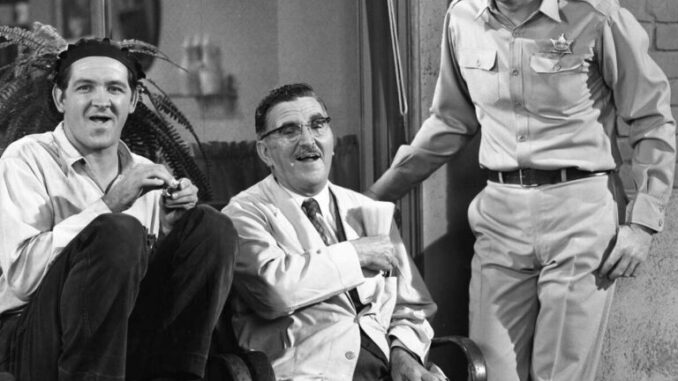
In the golden era of television, few shows captured the hearts of America like The Andy Griffith Show. Its folksy charm, gentle humor, and memorable cast of characters made it a beloved staple for eight successful seasons. We all remember Andy Taylor’s calm wisdom, Barney Fife’s chaotic bravado, and Opie’s sweet innocence. And, of course, we remember the lovable goofball in the mechanic’s jumpsuit: Goober Pyle.
But did you know Goober had his very own spinoff show?
You’re not alone if your answer is no — most fans have never heard of Goober & The Truckers’ Paradise, a failed attempt by CBS to launch the character into his own sitcom. Though it lasted just a single episode, the story behind it is a fascinating glimpse into the network’s hopes, the enduring appeal of Mayberry, and why not every character is meant to lead a show.

🚗 From Mayberry Grease Monkey to Television Star
Goober Pyle, portrayed by George Lindsey, was the cousin of the already-beloved Gomer Pyle (played by Jim Nabors). Gomer had rocketed to fame in his own spinoff, Gomer Pyle, U.S.M.C., which ran for five successful seasons starting in 1964. CBS, seeing gold in the hills of Mayberry, hoped lightning might strike twice with another Pyle.
Goober had quietly filled Gomer’s shoes at Wally’s Filling Station after Nabors left for his Marine sitcom. And in some ways, Goober actually outlasted Gomer — appearing in 86 episodes of The Andy Griffith Show compared to Gomer’s 23.
While Gomer was sweet and naive, Goober was a little rougher around the edges — a loveable lug with an earnest heart and a few screws loose. He had fans, for sure. But could he carry an entire show?
In 1979, CBS decided to find out.
🎬 Goober & The Truckers’ Paradise: A Pilot That Went Nowhere
In the spring of that year, CBS aired a special 30-minute episode that served as a backdoor pilot for Goober & The Truckers’ Paradise. It was supposed to be Goober’s big breakout.
The premise? Goober leaves Mayberry to visit his sisters, Toni, Pearl, and Becky, who are running a truck stop diner. The idea was simple: take Goober’s Mayberry innocence and drop him into a new, more chaotic environment. New faces, new situations, same Goober.
The show leaned into the culture clash between Goober’s small-town worldview and the fast-paced world of highway truckers. Hijinks were inevitable. Goober would fix rigs, blunder through diner life, and try to adjust to a place where people didn’t wave as they walked by.
But something just didn’t click.
The special aired quietly. It didn’t generate much buzz, and CBS chose not to pick it up for a full series. Goober, it seemed, was destined to be a supporting player — a comic sidekick, not a leading man.

🧢 Why the Show Didn’t Work
So why did Goober & The Truckers’ Paradise fail, especially when Gomer had soared?
One major reason might be timing. By 1979, television was changing. Sitcoms were evolving with edgier humor and more sophisticated plots. Viewers were tuning in to MASH*, Three’s Company, and Taxi. Compared to those, a show about a naive mechanic fumbling his way through truck stop culture felt dated.
Another factor: Goober was lovable, but he was always more effective in short bursts. He shined best when bouncing off others — Andy’s calm, Barney’s nerves, Floyd’s rambling — not when carrying the weight of the story.
And the cast of characters in the pilot wasn’t quite strong enough to support him. Unlike Mayberry, which had layers of relationships and history, the truck stop setting lacked that same warmth and familiarity.
👨🔧 George Lindsey’s Love for Goober Never Faded
Despite the show’s failure, George Lindsey never lost his love for the character.
Some critics and viewers saw Goober as a stereotype of Southern ignorance, but Lindsey disagreed. He always defended Goober, saying he was an everyman — kind, helpful, good-hearted. In interviews, he spoke proudly of the character’s integrity and authenticity.
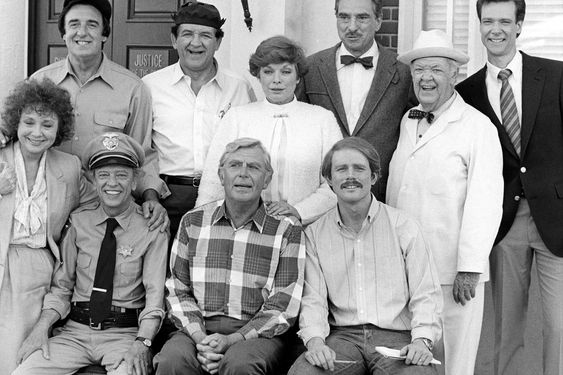
Lindsey reprised Goober multiple times over the years. He appeared in Mayberry R.F.D., Hee Haw, and even the beloved 1986 reunion movie Return to Mayberry. In that special, the whole gang came together again: Andy, Opie, Barney, and yes, Goober, who was still fixing cars and still wearing his iconic hat.
💔 The Legacy of a Forgotten Spinoff
Goober & The Truckers’ Paradise is barely a footnote in TV history. It aired once, made a small splash, and vanished. There are no DVDs. No reruns. No cult following. But in a way, that failed pilot speaks volumes about what made The Andy Griffith Show so special.
Mayberry wasn’t just a setting — it was a feeling. A constellation of perfectly balanced characters, chemistry, and simplicity. Pulling one star from the sky didn’t create a new galaxy — it just made the original a little dimmer.
Still, the attempt is part of the story.
Goober didn’t need his own show to be memorable. He already was. He belonged in Mayberry, popping into scenes with his grin and his gap-toothed charm. And for fans who remember him fondly, that’s more than enough.
🌟 Final Thoughts: A Character Worth Remembering
The history of The Andy Griffith Show is filled with moments that fans cherish, from Barney’s badge troubles to Opie’s heartfelt lessons. Goober might not have had his moment in the spotlight the way Gomer did, but he’s forever part of what made the show sing.
Sometimes, side characters are best left where they shine brightest — as part of an ensemble, surrounded by people who bring out their best. George Lindsey understood that, and embraced it until the very end.
So if you’ve never heard of Goober & The Truckers’ Paradise, don’t worry — you’re not alone. But now that you know, you’ve got one more reason to smile next time you see Goober pop up on screen.
Mayberry wouldn’t have been the same without him.